



When choosing a gutter vacuum, you might think that the most important feature is the wattage, and that the higher the wattage, the better the performance. But there’s more to the story of what goes into a good gutter vac!
Wattage simply tells you how much power the motor is using, not how well it’s cleaning. So, higher wattage can mean more energy consumption, more noise and more heat! It’s also helpful to know the wattage of your vacuum in consideration of which power outlets are compatible with it.
Airflow:
The first factor that contributes to suction performance is Airflow, which is normally measured in Litres Per Minute (LPM). Airflow is the force that moves debris through the pole and into the vacuum.
So, the higher the airflow, the quicker the transfer of leaves, moss and other gutter debris. This means that a vacuum with low airflow will struggle to carry lighter debris all the way through the hose into the drum.
Water Lift:
Next, we have Water Lift, usually measured in millimetres or inches. This tells us the strength of the suction when lifting heavy or wet debris like sludge or water. So, the higher the water lift, the more powerful the suction, and the heavier the debris that can be lifted.
Conclusion:
Some of the best gutter vacuums on the market have been developed with advanced motor technology to give you more Airflow and more Water Lift from less motor wattage. This means they are lighter, quieter and more energy efficient.
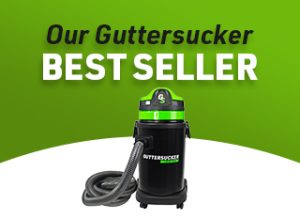
Guttersucker vacuums have been specifically designed to have the perfect mix of Water Lift and Airflow- ensuring top gutter cleaning performance every time.


